
Want to make your home safer for allergy sufferers?
Rugs can be one of the best ways to naturally reduce allergens in the home. That’s right…
It’s what’s under your feet that’s making the difference.
According to the American Lung Association, four out of five homes in the United States have dust mite allergens in at least one bed. They’re also one of the most common allergens to appear in house dust. If you or your family suffer from allergies or asthma, it’s time to look at what’s underfoot.
Here’s the good news…
The right flooring can dramatically reduce the amount of allergens in your home. And when it comes to allergy sensitive households, one type of flooring comes out on top…
Wool rugs.
What you’re about to discover:
- Why Wool Is a Natural Allergen Fighter
- The Science Behind Wool’s Hypoallergenic Properties
- How Wool Rugs Compare to Synthetic Options
- Choosing the Right Wool Rug for Your Home
- Maintenance Tips for Allergy Sufferers
Why Wool Is a Natural Allergen Fighter
People think natural fibres attract allergens like dust and pollen. But wool does the exact opposite. A quality woollen rug can help create a cleaner indoor environment for your home decor, all while adding warmth and style to any room.
Wool fibres have a unique structure. They’re made up of tiny compartments that trap dust, pollen and other airborne particles. This prevents these allergens from floating around in the air and getting into your airways.
Think of it like a natural air filter sitting on your floor.
Wool rugs trap particles too. Unlike hard floors where dust swirls around every time someone walks by, wool rugs hold onto those particles until they’re vacuumed away.
The Science Behind Wool’s Hypoallergenic Properties
Wool is actually naturally resistant to dust mites. And these microscopic bugs are one of the most common allergy triggers.
About 20 million Americans are allergic to dust mites.
Here’s why wool fights back:
Dust mites need humidity to survive. In fact, they require moisture levels of at least 50% to thrive. Wool, on the other hand, naturally wicks moisture away from its surface. This creates a dry environment where dust mites find it hard to live.
But that’s not all…
Wool also contains lanolin. This is a natural oil that has antibacterial and antifungal properties. The lanolin in wool fibres creates an inhospitable environment for the moulds, fungi, and bacteria that cause allergic reactions.
The result?
- Dust mites can’t thrive in wool fibres
- Mould and mildew struggle to grow
- Bacteria find it difficult to multiply
In fact, the German Applied and Experimental Allergy Research Association compared dust mite populations in wool carpets and nylon carpets. The wool carpets came out on top.
Pretty impressive for a natural material.
How Wool Rugs Compare to Synthetic Options
Synthetic rugs are often designed with hypoallergenic properties in mind.
Synthetic rugs are made from materials like nylon and polypropylene. These fibres are moisture and mould resistant. And let’s be honest, they’re often cheaper than natural wool rugs.
But there’s a catch…
Synthetic rugs can give off volatile organic compounds (VOCs). These are airborne chemicals that come from the rug’s manufacturing process. They can trigger respiratory irritation in sensitive people. Children and asthma sufferers are especially vulnerable to these VOCs.
Not only do wool rugs not off-gas these harmful chemicals, but they actually absorb some airborne pollutants too. This can help improve indoor air quality rather than contribute to the problem.
Something else to consider…
Synthetic fibres create static electricity. Dust and allergens cling to this static and get spread around your home. Wool is naturally anti-static. Instead of allergens flying around, they get trapped in the fibres.
The bottom line?
Wool provides natural allergy protection without the chemical and VOC concerns of synthetic rugs.
Choosing the Right Wool Rug for Your Home
Not all wool rugs are created equal. The quality of the wool matters if you have allergy sensitive people in your home.
High-quality wool comes from well-managed sources. These fibres are longer and more resilient. They don’t shed as much and they hold their hypoallergenic properties longer.
Low-quality wool has shorter, weaker fibres. These break easily and lead to shedding. This only increases the number of particles in the air.
Here are some factors to consider when shopping for wool rugs:
- Pile height. Low pile or tight-loop designs trap dust better and are easier to clean. These rugs prevent allergens from settling deep in the rug.
- Fibre purity. Choose 100% pure wool rugs.Blends and rugs with synthetic fillers won’t have the same natural benefits.
- Processing. The less chemical treatment, the better. The natural lanolin and fibre integrity should be preserved.
Dense, tightly woven wool rugs are a great choice for living rooms, bedrooms, and other areas with a lot of foot traffic. These rugs act as a passive filter. They help capture airborne particles without sacrificing easy maintenance.
Maintenance Tips for Allergy Sufferers
Even the best wool rug can’t protect you from allergens if you don’t maintain it properly.
Regular cleaning and maintenance is essential for keeping allergen levels low and the life of your rug. Here’s the essential routine:
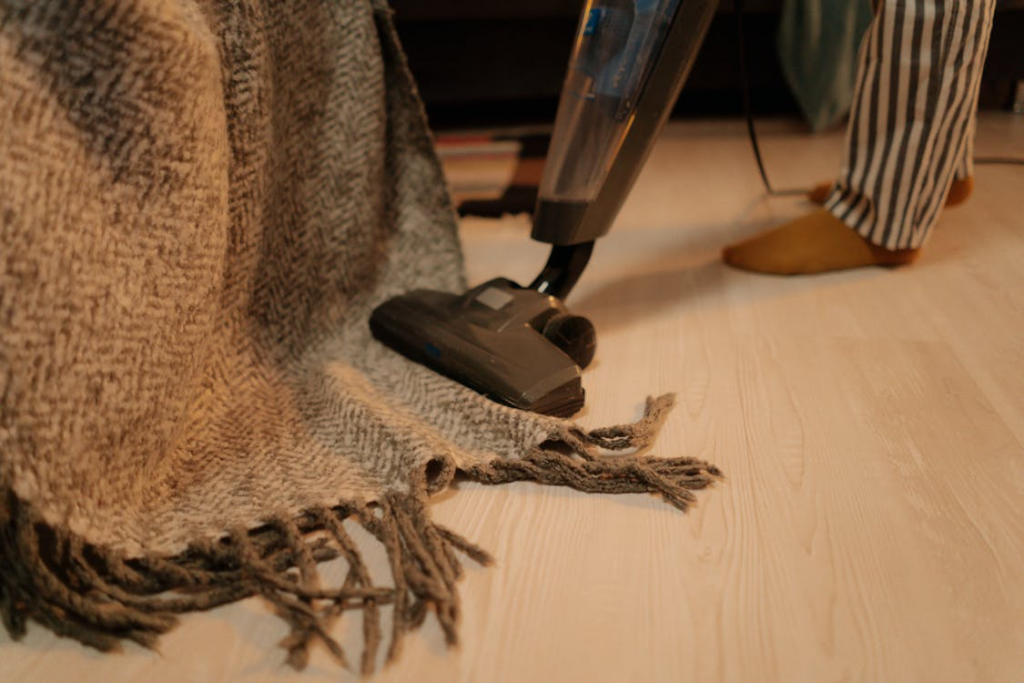
Vacuum at least once a week. Use a vacuum with a HEPA filter to trap fine dust and allergens. HEPA filters have high-efficiency particles. They don’t just disperse those particles back into the air.
Try to avoid wet cleaning. The lanolin in wool naturally repels dirt. It doesn’t penetrate the fibres like it does in synthetic rugs. A quick vacuum is usually all that’s required.
Here are some additional tips:
- Rotate your rug twice a year. This spreads the wear and reduces stress on the fibres
- Keep humidity in your home between 30% and 50%
- Consider pairing your wool rug with a HEPA air purifier
- Avoid putting wool rugs in areas with excessive damp
Professional deep cleaning once a year is recommended. This helps remove any built-up allergens. Just be sure to use a cleaning service that uses methods appropriate for wool.
Wrapping Things Up
Wool rugs are one of the best ways to naturally reduce allergens in the home. They provide real benefits for allergy sensitive households.
To quickly recap:
- Wool fibres trap dust, pollen and allergens
- Wool creates an inhospitable environment for dust mites
- Natural lanolin provides antibacterial protection
- Wool rugs don’t off-gas like synthetic alternatives
- Low pile designs are easiest to maintain
For families with allergies or asthma…
Investing in some quality wool rugs can make a noticeable difference in day to day comfort. Better air quality. Fewer allergy symptoms. And a beautiful addition to any room.
That’s a win-win-win.