
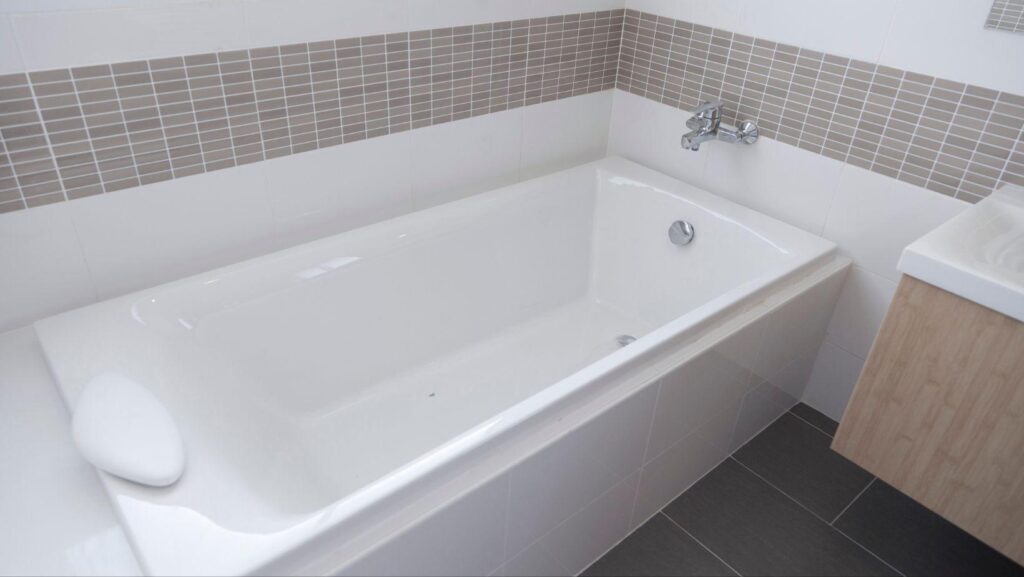
A bathtub is bought once but used and cleaned for years. “Quality” cannot be reduced to a glossy finish or a prestigious price tag. The best quality bathtubs combine sound construction, a comfortable bathing well, clear specifications, and an installation method that suits the house. Even expensive bathtubs can disappoint when dimensions are wrong or plumbing is improvised, while a well-chosen midrange model can feel excellent because every practical detail was resolved before purchase.
It helps to separate product quality from project quality. Product quality concerns the tub itself: its material, finish, rigidity, drainage components, and consistency. Project quality includes delivery access, floor support, waterproofing, plumbing, and the skill of the installer. A homeowner needs both. A premium tub placed on an uneven base or connected to a poorly aligned drain is not a premium result.
Expensive Bathtubs: Where the Money May Go
Higher prices can reflect material, manufacturing complexity, size, finish, hardware, or brand positioning. Cast iron requires substantial material and handling. Solid-surface forms may use dense compositions and labor-intensive finishing. Large sculptural tubs require more packaging and freight protection. Special colors, matching drains, or decorative feet can also increase the total. These differences are real, but they still need to serve the room.
When comparing expensive bathtubs, read the specification sheet before the marketing copy. Note the empty weight, water capacity, external dimensions, interior floor length, soaking depth, overflow configuration, and drain placement. Check whether the drain, overflow, feet, or mounting hardware are included. A lower listed price can become the costlier choice if essential components must be sourced separately or if the installation requires unexpected structural work.
The visible surface deserves close attention. Look for a consistent finish around curves and edges, not only across the large side surface. Ask how the material should be cleaned and what products must be avoided. A surface that suits a household’s real cleaning habits will remain attractive longer than one that demands a routine nobody intends to follow.
Traditional Bathtubs in Contemporary Homes
There is nothing outdated about a form that has survived because it is useful and pleasing. Traditional bathtubs may include tubs with decorative feet, slipper, double-ended, or classic pedestal silhouettes. They can give a new bathroom warmth and identity, particularly in an older house where aggressively minimal fixtures feel disconnected from the architecture.
The trick is to interpret rather than imitate. A classic tub does not require a room full of reproduction fittings. It can sit comfortably with plain stone-look tile, simple wall paneling, or a modern vanity when color and proportion connect the pieces. One vintage reference is often more convincing than five. A classic raised tub with restrained hardware, for example, can provide the historical note while lighting and storage remain clean and contemporary.
Traditional shapes still need modern planning. Confirm faucet location, supply routes, overflow, and clearance for cleaning. Decorative feet must be correctly installed and the tub leveled. If the bath doubles as a shower, consider how water will be contained and whether the arrangement is genuinely comfortable for daily use. Nostalgia should not make the floor wet.
Buy Bathtubs Only After Testing the Plan on Paper
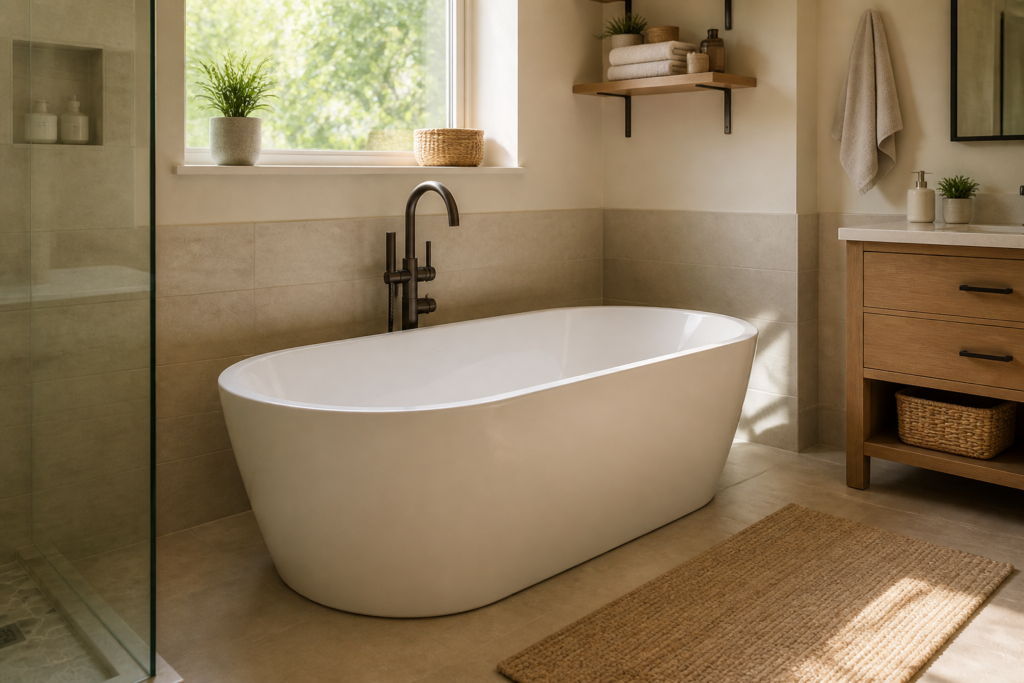
Before you buy bathtubs, create a small decision sheet for the project. Begin with non-negotiables: maximum footprint, minimum comfortable interior length, drain location, installation type, and delivery constraints. Add preferences such as color, silhouette, material, and hardware finish. Finally, note the complete budget, including plumbing changes, faucet, drain components, labor, floor preparation, and disposal of an old tub.
This hierarchy protects the decision from showroom excitement. If a model fails a non-negotiable, it leaves the shortlist even if the shape is beautiful. If several models fit, preferences can decide among them. The method sounds strict, but it actually makes shopping easier because the homeowner is comparing suitable options rather than an endless catalog.
Draw the chosen model to scale on a floor plan. Include the vanity, toilet, door swing, shower enclosure, and the clear path through the room. In a freestanding arrangement, check the gap behind and beside the tub. Can a hand reach there with a cloth? Is there room to service a floor-mounted filler? For an alcove installation, confirm that the rough opening corresponds to the product instructions and that the flange detail works with the wall finish.
How Material Changes Weight, Warmth, and Care
Acrylic is popular for good reasons: it allows varied shapes, is comparatively light, and has a smooth surface that is straightforward to maintain when cleaned correctly. Quality depends on more than the word “acrylic,” however. Rigidity, reinforcement, base support, and finish all matter. The installation instructions should explain how the tub must be supported so it does not flex under use.
Cast iron feels solid and can retain heat well, but it is heavy before a single gallon of water is added. Access and structure must be discussed early. Porcelain-enameled steel offers a familiar hard surface in a lighter package than cast iron, though sound and heat behavior differ. Solid-surface or resin tubs create seamless-looking shapes and a substantial touch; their weight and cleaning guidance vary by composition.
Rather than searching for a universal winner, ask a more useful question: which tradeoffs fit this project? A second-floor renovation with narrow stairs may favor a lighter tub. A ground-floor suite with verified support may welcome a heavier material. A family bathroom may prioritize durability and easy cleaning, while a dedicated soaking room can justify a deeper, more sculptural form.
Installation Is Part of the Product Experience
Good installation begins before delivery. The plumber should confirm supply and waste locations, the contractor should verify the floor and wall conditions, and everyone should have the current product documentation. When the tub arrives, inspect it before it disappears behind protective covering. After connection, fill and drain it while accessible so leaks can be found before finishes are closed.
Small finishing decisions matter. The tub should be level according to its instructions, the drain should operate smoothly, and sealant joints should be neat and appropriate for movement. Protect the surface from tools and construction debris. Record the product information and keep receipts, care guidance, and installer details together.
Long-term value is not the same as the highest purchase price. It is the combination of a tub that fits the body and room, materials that suit the household, complete components, and installation that respects the product. Make those decisions in order, and quality becomes something you can feel every day rather than a claim printed on the box.