
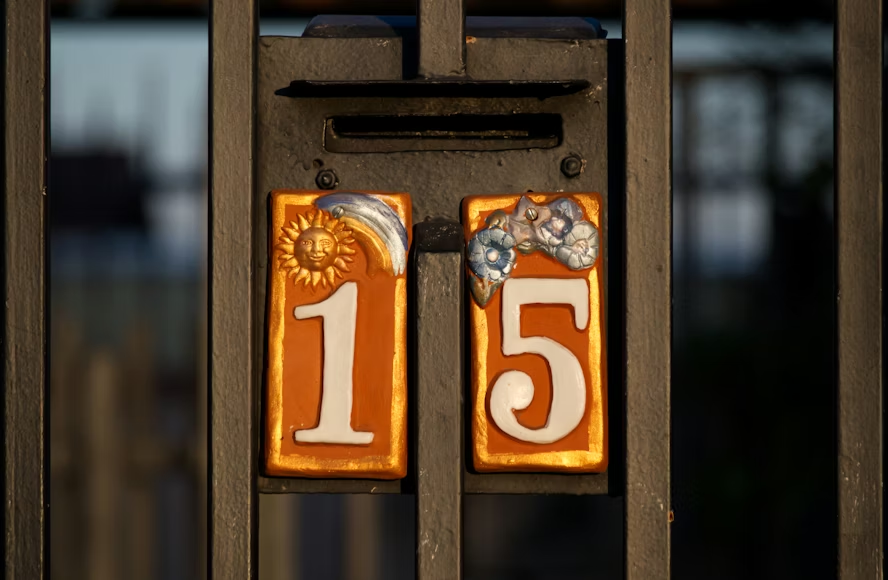
Impress visitors by setting your home apart from the neighbors?
More often than not, homeowners neglect one of the simplest tricks for a standout curb appeal. And the truth is…
The first thing guests, delivery drivers, and potential buyers notice is the house numbers.
They are small. Simple. But they can make or break your home’s exterior.
The good news?
Selecting the perfect handcrafted house numbers is not complicated. In fact, when done right, this minor improvement can take your home decor to another level and leave a long-lasting first impression.
You will learn:
House Numbers Impact More Than You Think
Let’s face it…
House numbers are not just for practical purposes; they set the tone for your whole property.
When someone approaches your home, your address display gives them a clear message. Do you care about details? Do you put thought into every aspect of your home? Is this a well-maintained home?
Per a 2025 survey by American Home Shield, 68% of home buyers say that lackluster curb appeal is a dealbreaker. Your address numbers are one of the important elements of the “wow factor”.
And why is it important…
Handcrafted house numbers exude quality. They reflect your attention to detail that cheaper alternatives could never achieve. Each item is crafted with care and has its own unique character.
Additionally, house numbers have a functional purpose. Emergency services need to locate your home in time. Delivery men shouldn’t have difficulties reading your address from the street.
A well-thought-out address display will make both jobs easier.
Materials That Will Help You Stand Out
Your house numbers are not all the same.
The material will significantly impact the final visual result. Here’s what will work the best:
Choose something that matches the existing hardware on your home. Door handles, light fixtures, and other exterior elements must feel cohesive with the address display.
How to Choose the Best Style for Your Home
This is the point where most people make the crucial mistake…
They see house numbers that they like without even considering their home’s architecture.
For a modern home, you need clean lines and a sans-serif font. A modern font, such as Helvetica, or other geometrically shaped font, is best. Floating mount styles with standoffs between the numbers and the wall are suitable for a modern home exterior. The shadows give depth to your house numbers and make your address stand out.
Traditional homes go better with serif fonts or classic script styles. Traditional houses look good with plaques with raised numbers. Decorative borders that work well with colonial or Victorian architectural details are suitable.
Farmhouse and rustic properties are best paired with weathered metals or wood accents. You can use distressed finishes on wood. However, it should look authentic and not worn out.
Mid-century ranches require era-appropriate designs. Geometric shapes and fonts that are bold yet simple give a perfect retro vibe.
Your home should not fight against its character. It is necessary to emphasize it.
The font style is as important as the material is. Bold and thick fonts are more visible from the street. The thin and/or decorative script fonts will look elegant from close by but will not be visible from the street.
Size and Position Tips
The size is more important than you might think.
Numbers that you hold in your hand will look perfect. However, they will look tiny and not visible from a distance on a large wall facade. The rule of the thumb is as follows:
Positioning options include:
The most traditional place to put house numbers is on your front door area. You can mount them next to the door or on the wall nearby so that they catch the natural light.
Garage or pillar, whichever one you have, is also a good option for houses that are set back from the street. The numbers should be bigger in this case to cover the longer distance.
Near the mailbox placement provides maximum visibility. This option is especially helpful if your house sits far from the street, and/or the front yard is set back behind landscaping.
Lighting also should be considered. Solar-powered backlighting or a simple spotlight can make your address visible at night. This is not just for the aesthetics. It is also for safety and practical purposes.
Installation Done Right
You have selected the best handcrafted numbers. Do not destroy them with the bad installation.
Floating mount installation is the most common method for modern homes. Standoffs create the space between the numbers and the wall, and these shadows make the address look eye-catching.
Most quality house numbers come with a template for installation. Use it. It will help you to ensure consistent spacing between the digits.
The spacing between numbers, called kerning, is also crucial for readability. If numbers are too close to each other, the digits will blur in one. If you make the spaces between the numbers too wide, they will look disconnected. It is good to aim for half the width of each number as a spacing guide.
Surface preparation only takes five minutes but can save you from headaches in the future. Clean the mounting surface thoroughly, mark the drill points with extra care, and use anchors that will work for your particular wall material.
Brick, stucco, and wood all have different mounting hardware. It is vital not to skip this step.
Wrapping It Up
Upgrading your house numbers is one of the simplest methods for a curbside wow factor.
Research supports it too. Studies show that homes with superior curb appeal sell for an average of 7% more than similar properties in the same area.
Handcrafted house numbers are more expensive than generic home store options. But they offer something that mass-produced numbers can never give you:
It will pay off both in daily enjoyment and in the long-term property value.
To summarize:
The address on your home is permanent. Make it look that way.